







Across global currency markets, activity unfolds through systems that quietly dictate how trades are placed, processed, and closed, often without the trader noticing the machinery beneath each click. Access feels immediate. Execution does not always behave that way. Somewhere within this structure, the choice of a forex broker platform determines how consistently orders translate into actual market positions, especially when conditions tighten or shift abruptly.
Precision defines outcomes. Within that reality, traders do not interact with charts alone but with layered systems that manage liquidity routing, price aggregation, along with order confirmation in fractions of a second, where even minor inefficiencies compound over time. Stability, therefore, is not a technical luxury but a functional requirement tied directly to execution confidence.
Platform Infrastructure and Execution Standards
At the execution layer, systems operate through defined routing mechanisms, influencing how quickly trades reach liquidity providers alongside how accurately pricing reflects current market conditions. Some platforms internalize flow. Others connect outward. The distinction affects slippage behavior, spread consistency, as well as execution reliability under pressure.
Speed alone does not guarantee accuracy. Infrastructure resilience can be observed during high-impact sessions, such as when platforms manage volume spikes in incoming orders without freezing interfaces or slowing down confirmation. Stabilized backend, coupled with optimized server location, will keep the performance predictable even in the case when volatility spreads unpredictably.
Account Types and Trading Conditions
Across trading profiles, account structures introduce variation in cost distribution, margin usage, along with trade sizing flexibility, allowing participants to operate within defined parameters rather than fixed constraints. Some accounts prioritize lower spreads with commission overlays, while others embed costs directly into pricing, shaping how trades are evaluated before entry.
Costs define long-term viability. Within margin systems, leverage acts as both an amplifier and a constraint, depending on how it is configured and applied. Platforms that allow adjustable leverage settings provide control, enabling traders to scale exposure based on strategy rather than operating under rigid limits that may not align with risk tolerance.
Spread Structures and Pricing Models
Across pricing environments, spreads either remain static or fluctuate in response to liquidity depth, each approach introducing different execution characteristics. Variable spreads reflect live conditions, expanding during uncertainty, while fixed spreads maintain consistency regardless of external pressure.
What happens when spreads widen without warning? Short-term strategies feel the impact immediately, as entry precision shifts, altering the risk-reward balance in ways that cannot be ignored.
Leverage Allocation and Risk Exposure
Under leveraged conditions, traders gain access to larger positions relative to their capital, though exposure increases proportionally, requiring disciplined management rather than aggressive scaling. Platforms that present leverage as a controllable parameter allow traders to adjust exposure dynamically. Control defines survival. Unmanaged exposure accelerates losses.
Tools, Analytics, and Interface Design
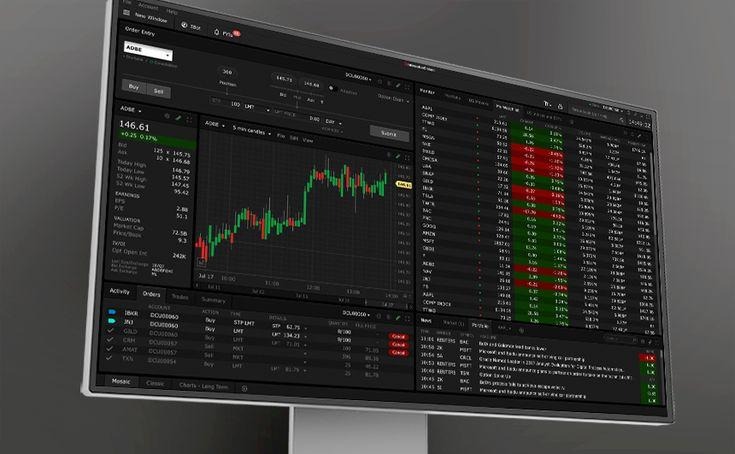
Across trading systems, analytical tools function as extensions of decision-making, offering structured ways to interpret price action rather than relying on instinct alone. Platforms integrate indicators, charting overlays, alongside data visualization methods that allow traders to identify patterns without switching between multiple systems.
Clarity reduces hesitation. Interface design plays a quieter role yet influences execution speed more than expected. When layouts are intuitive, functions remain accessible without distraction, reducing the likelihood of operational errors that occur when navigating cluttered environments under time pressure.
Charting Capabilities and Indicators
Within analytical setups, charting tools provide multi-timeframe views, indicator layering, along with drawing capabilities that support structured analysis rather than isolated observations. Indicators serve as reference points, not conclusions, requiring interpretation within broader market context. Tools assist. They do not decide.
Order Types and Execution Controls
Across execution features, platforms provide various order types that allow traders to define entry, exit, alongside risk parameters before trades are activated, limiting the need for reactive adjustments once positions are live. Predefined structure reduces emotional interference.
Security, Compliance, and Fund Protection
Behind each transaction, security systems operate continuously, safeguarding both financial data and account access through encryption layers, authentication protocols, alongside monitored transaction channels. These systems remain invisible when functioning correctly, becoming noticeable only when absent.
Security is not optional. Across operational frameworks, compliance alignment signals adherence to structured financial practices, even though regulatory environments differ across regions. Segregation of client funds, combined with transparent operational policies, contributes to a controlled environment where trust is built through process rather than assumption.
Data Protection and Encryption Standards
Within digital systems, encryption technologies secure user data during transmission, preventing unauthorized access while maintaining the integrity of transactional information across all stages of interaction.
Withdrawal Processes and Transparency
Across withdrawal workflows, efficiency reflects internal coordination, where requests are processed within defined timelines supported by clear documentation requirements, reducing uncertainty for users managing capital movement. Delays signal structural gaps. Consistency signals control.
Accessibility and Multi-Device Integration
Across modern trading environments, accessibility extends beyond fixed systems, allowing traders to engage with markets through mobile interfaces, browser-based platforms, alongside integrated applications that synchronize data continuously.
Mobility changes behavior. Opportunities appear without warning. From a system perspective, cross-device synchronization ensures that account data, open trades, along with analytical settings remain aligned regardless of where access occurs, reducing friction between analysis and execution.
Mobile Trading Capabilities
Within mobile systems, platforms retain essential trading functions, adapting complex workflows into simplified interfaces without removing core capabilities required for active participation.
Cross-Platform Synchronization
Across integrated environments, synchronization ensures that updates made on one device reflect instantly across others, maintaining continuity without requiring manual intervention.
Final Thoughts
Within structured trading ecosystems, platform selection reflects operational alignment rather than surface-level evaluation, where execution pathways, analytical integration, along with system reliability collectively shape how effectively trades are managed under real conditions.
Some systems function. Few remain consistent. In that context, 9 Square FX operates with a framework built around established trading platforms, offering multiple account configurations, integrated analytical tools, alongside structured execution conditions that support consistent interaction with global markets. The system enables access across devices, maintains clarity in trading conditions, and supports users through a controlled operational environment. For those evaluating the best forex platform in UAE, this structure presents a functional setup centered on execution stability, usability, along with practical trading requirements.