




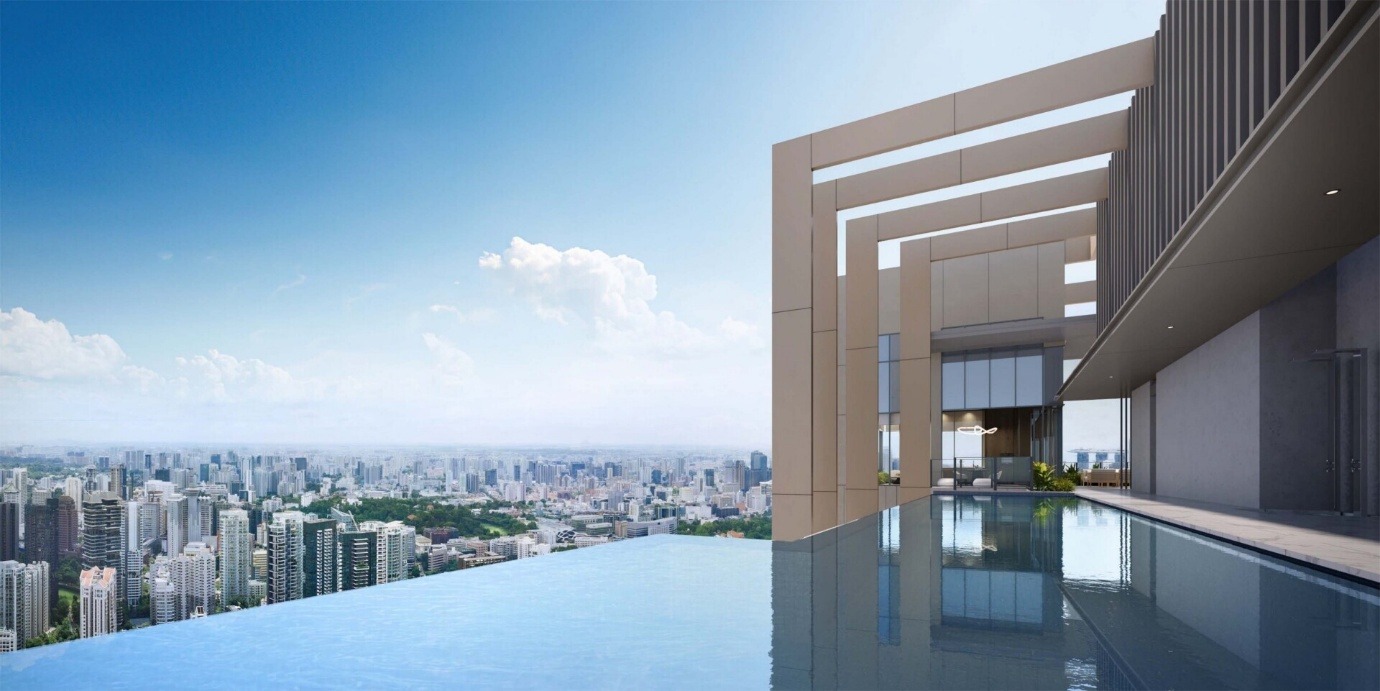

The high-density cities need residential planning that cannot be reduced to high-density units on limited land. The livability is a recent phenomenon that is used as a benchmark, and it is concerned with the treatment of space on a daily basis by its dwellers. Tengah Garden Residences and Promenade Peak are some of the developments that incorporate this changing attitude, with the planning strategy being influenced by comfort, movement, and usability. These projects are an example of how considerate residential settings can facilitate quality living even in the tight urban environments.
Smart Layouts Reducing the Impact of Density
Intelligent layout design is one of the most effective strategies that can be used as a planning method in dense areas. Tengah Garden Residences illustrates what internal zoning has been doing to minimize the sense of crowding by well differentiating between personal and shared functions. Residential quarters will be designed in a natural manner such that residents can move freely without having to be confused by spaces. Similar principles also apply to Promenade Peak, where proportion and circulation are employed to make sure that homes are not crowded, but they are organized instead.
Designing Homes That Support Daily Routines
The livability of the neighborhood is greatly enhanced when residential architecture is designed around actual activities rather than hypothetical ones. This practice is echoed by Promenade Peak, which is concerned more with the practical layout of rooms and sensible transitions between them. Tengah Garden Residences advantages daily living since it presents layouts that can be easily adjusted to work at home, relax, and enjoy family time. The decisions on planning are made based on the real lives of residents, which produces an environment that is easy to use and efficient.
Community Spaces Planned with Purpose
Shared spaces in high-density developments should be well designed to increase livability and not be overcrowded. Communal design that is motivated by purpose is about comfort and usefulness. Among residential facilities such as Tengah Garden Residences, communal spaces are spaced out to avoid overcrowding, there is a clear distance between active and quiet areas, and accessibility is easily available without disturbing individual houses. These strategies in planning enable social interaction within the locality of residents without breaching personal boundaries.
Environmental Planning Enhancing Comfort
The significance of environmental considerations in livable residential planning is crucial. The Tengah Garden Residences incorporates the use of building orientation, natural airflow, and daylight access into their design. The Promenade Peak does the same strategies, guaranteeing that the natural elements are incorporated into daily lives and not the supplementary adornments. The pressures of urban life are alleviated by better ventilation of indoor spaces and less dependence on artificial lighting, as well as a more relaxed indoor environment.
Convenience as a Livability Strategy
Livable design in high-density areas is an important measure of convenience. Promenade Peak is a manifestation of effective transportation routes and rational access points that make the work of residents less effort-intensive on a daily basis. Tengah Garden Residences also emphasizes the need to install facilities and operational areas where they are likely to fit into the movement patterns. The reduced travel distances within the building and better wayfinding and layouts that support a variety of daily pursuits ensure that residents travel through their facility easily, even with the density limitations.
Privacy Maintained Within Compact Developments
Consideration of privacy is not a requirement of high-density living that should interfere with the planning. Tengah Garden Residences demonstrates that the unit orientation, buffer spaces, and regulated sight lines safeguard personal space. The Promenade Peak shares the same strategies so that inhabitants will be able to go back and relax even in the common places. These plans minimize the way noise is transmitted and intrusion into a visual space, which increases livability in small residential areas.
Conclusion
Residential planning is livable-driven planning that offers much beyond first occupancy benefits. Promenade Peak and Tengah garden residences emphasize the way flexible designs, harmonious environments, and functional common areas can be ensured to be flexible to lifestyle changes. Combining comfort, privacy and convenience, these planning strategies provide a sustainable solution to high-density urban living, which will make residential environments functional, supportive and desirable to live in, even in the long run.