
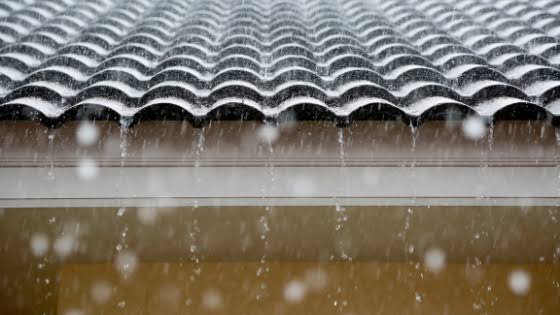
After weeks of dry weather, rain can feel like a relief. Gardens need it, reservoirs need it and anyone trying to keep a lawn alive is unlikely to complain.
For a roof, however, the first substantial rainfall after a prolonged dry spell is something of a stress test.
A building can go for weeks without showing the slightest sign of trouble, even when defects are already developing above. Cracked materials remain dry. Partially blocked gutters sit unnoticed. Small gaps around flashings cause no visible problems because there is simply no water trying to get through them.
Then the weather changes.
A heavy downpour can reveal several months of deterioration in the space of an afternoon.
Drought does not mean nothing is happening on the roof
It is easy to think of dry weather as harmless for roofing.
In reality, prolonged periods of sunshine and high temperatures create their own stresses. Roof coverings heat up during the day and cool overnight, creating repeated cycles of expansion and contraction.
Different materials respond at different rates.
Lead expands differently from mortar. Metal flashings behave differently from tiles. Roofing membranes react differently from the structure beneath them.
A correctly designed roof accommodates this movement, but older materials and areas that were already deteriorating can become vulnerable.
The important distinction is that dry weather may create or worsen a defect without immediately revealing it.
Rain provides the evidence.
Water quickly finds the weakest point
Rain does not need a large hole to enter a building.
A small crack around a chimney flashing can be enough. So can a displaced tile, deteriorating seal around a rooflight or damaged section of membrane.
The problem becomes more noticeable during intense rainfall because water is arriving faster.
A minor weakness that might cope with light drizzle can struggle when large quantities of water are moving across the roof surface.
Wind makes matters more complicated.
Rain driven horizontally can reach junctions and overlaps that remain relatively protected during ordinary conditions. This is one reason a roof can appear completely watertight during one spell of rain and leak during another.
The amount of rain matters, but so does its direction and intensity.
Drainage can be the real culprit
Not every leak begins with damaged roofing.
Sometimes the roof covering is doing exactly what it should, but the water has nowhere to go.
During a long dry period, gutters and outlets can gradually collect material without anyone noticing. Moss breaks away from tiles. Dust accumulates. Birds introduce nesting material. Seeds, twigs and leaves find their way into valleys and drainage channels.
There has been little water to flush any of it away.
The first substantial downpour then attempts to move everything at once.
A partially blocked outlet can quickly become completely obstructed. Water levels rise, gutters overflow and drainage systems begin behaving in ways they were never intended to.
On a pitched roof, this may result in water spilling down external walls or backing up around valleys.
On a flat roof, it can create significant areas of standing water.
The problem may be nowhere near the stain
One of the frustrating things about roof leaks is that water does not always appear where it entered.
It follows gravity, but it also follows surfaces.
Water entering near a chimney can run along timber before dripping onto insulation. From there, it may travel again before finally reaching a ceiling.
The damp patch visible inside a bedroom might therefore be several metres from the original defect.
This is why repairing whatever happens to sit immediately above an internal stain is not always successful.
Proper diagnosis involves looking at the wider roof construction, particularly junctions, penetrations and drainage routes.
A little experience goes a long way here. The obvious answer is not always the correct one.
Flat roofs reveal drainage problems quickly
Flat roofs provide a particularly clear example of what happens when rainfall returns after drought.
Despite the name, a properly designed flat roof is not completely level. It should have sufficient falls to move water towards designated outlets.
If those outlets become restricted, the system cannot work as intended.
Water begins accumulating around low points.
Some temporary standing water after intense rain may not indicate failure, depending on the roof design and covering. Water that remains for prolonged periods is different.
Persistent ponding places additional load on the roof and can expose vulnerable seams, details and penetrations.
Modern roofing services increasingly have to consider drainage performance alongside the condition of the waterproof covering itself, particularly as weather patterns become less predictable.
Older repairs can reveal themselves
The first heavy rainfall after a dry spell also has a habit of exposing previous repair work.
Most experienced contractors have encountered roofs containing several generations of fixes.
A patch here. Sealant around a flashing there. A replacement tile that does not quite match the surrounding covering. Another layer applied over an older flat roof.
Some repairs are perfectly sound and remain effective for years.
Others were always intended to be temporary but somehow became permanent.
Prolonged heat can be particularly unforgiving to inappropriate sealants and patching materials. Something that looked watertight in spring may have cracked or separated by late summer.
Once rain arrives, the weakness becomes obvious.
Chimneys deserve particular attention
Chimneys are among the most common areas for water ingress because they interrupt the otherwise continuous roof covering.
The junction needs to cope with water approaching from several directions while allowing for movement between different materials.
Lead flashing, mortar joints and surrounding tiles all need to remain in good condition.
Older chimneys can introduce further complications through deteriorating pointing or porous masonry.
After prolonged dry weather, the first heavy rain may highlight staining around a chimney breast that has never previously been noticed.
It is tempting to assume the chimney itself is leaking, but diagnosis should include the surrounding roof details as well.
Commercial roofs face the same problem at a much larger scale
The principle becomes even more significant on commercial buildings.
A warehouse or industrial unit may have thousands of square metres of roof collecting rainfall.
A relatively short storm can therefore produce an enormous volume of water.
If outlets, gutters or internal drainage systems are restricted, problems escalate quickly.
Commercial roofs also contain numerous penetrations for ventilation, plant equipment, ducting and services. Each introduces another detail that needs to remain watertight.
For businesses, the consequences can extend far beyond repairing a ceiling.
Water can damage stock, machinery and electrical equipment. Offices may become unusable. Production can be interrupted.
Planned commercial roofing inspections therefore make most sense before problems start affecting operations, rather than being arranged only after water has entered the building.
Surrey properties have an additional challenge
Surrey’s mature trees and established gardens are part of the county’s appeal, but they also influence roof maintenance.
Properties in leafy areas tend to experience greater accumulation of organic material in gutters and valleys.
During drought conditions, trees may shed leaves earlier than expected as they respond to water stress. Small branches and seeds can also collect on roofs without being washed away.
One isolated leaf is irrelevant.
Several weeks of accumulated material can be very different.
This is particularly worth considering on properties where sections of guttering are difficult to see from the ground. Problems can develop unnoticed until water begins overflowing.
A sudden leak does not necessarily mean sudden damage
This is perhaps the most useful point for homeowners to understand.
If a roof starts leaking during the first major storm after weeks of dry weather, the storm may not have caused the defect.
It may simply have revealed it.
The underlying deterioration could have been developing for months.
That distinction matters because it changes how the problem should be approached.
Simply trying to stop the visible water may deal with the immediate symptom without identifying why it happened.
A proper inspection looks beyond the leak itself.
What condition are the surrounding materials in? Is drainage working correctly? Has previous repair work failed? Is the problem isolated or part of wider deterioration?
Those questions determine whether a small repair is sufficient.
Replacement should not be the automatic answer
Discovering a leak understandably makes homeowners nervous, particularly when the roof is older.
There is sometimes an assumption that once water gets in, replacement is inevitable.
That is not how good roofing decisions should be made.
An otherwise sound roof with one damaged detail may have many useful years remaining. Replacing it would be unnecessary.
At the other extreme, repeatedly patching a roof with widespread deterioration can become a false economy.
The sensible decision depends on condition rather than age alone.
Professional residential roofing assessment should establish the source of the problem first, then determine whether repair, maintenance or replacement offers the most appropriate long-term solution.
Pay attention when the weather changes
The first substantial rainfall after a prolonged dry spell provides useful information about a building.
Homeowners do not need to climb onto the roof to take advantage of it.
Watch gutters during rainfall from a safe position. Overflowing sections can indicate a blockage or poor alignment. Look for water running down walls where it normally would not. Check accessible loft spaces afterwards for new dampness, staining or unusual smells.
Then keep an eye on ceilings and chimney breasts over the following days.
The objective is not to find problems for the sake of it. Most well-maintained roofs will cope perfectly well.
It is simply worth recognising that weeks of sunshine do not prove a roof is watertight.
Only rain can do that.
And after a long, hot and unusually dry summer, the first proper downpour may tell property owners more about the condition of their roof than the previous two months combined.