





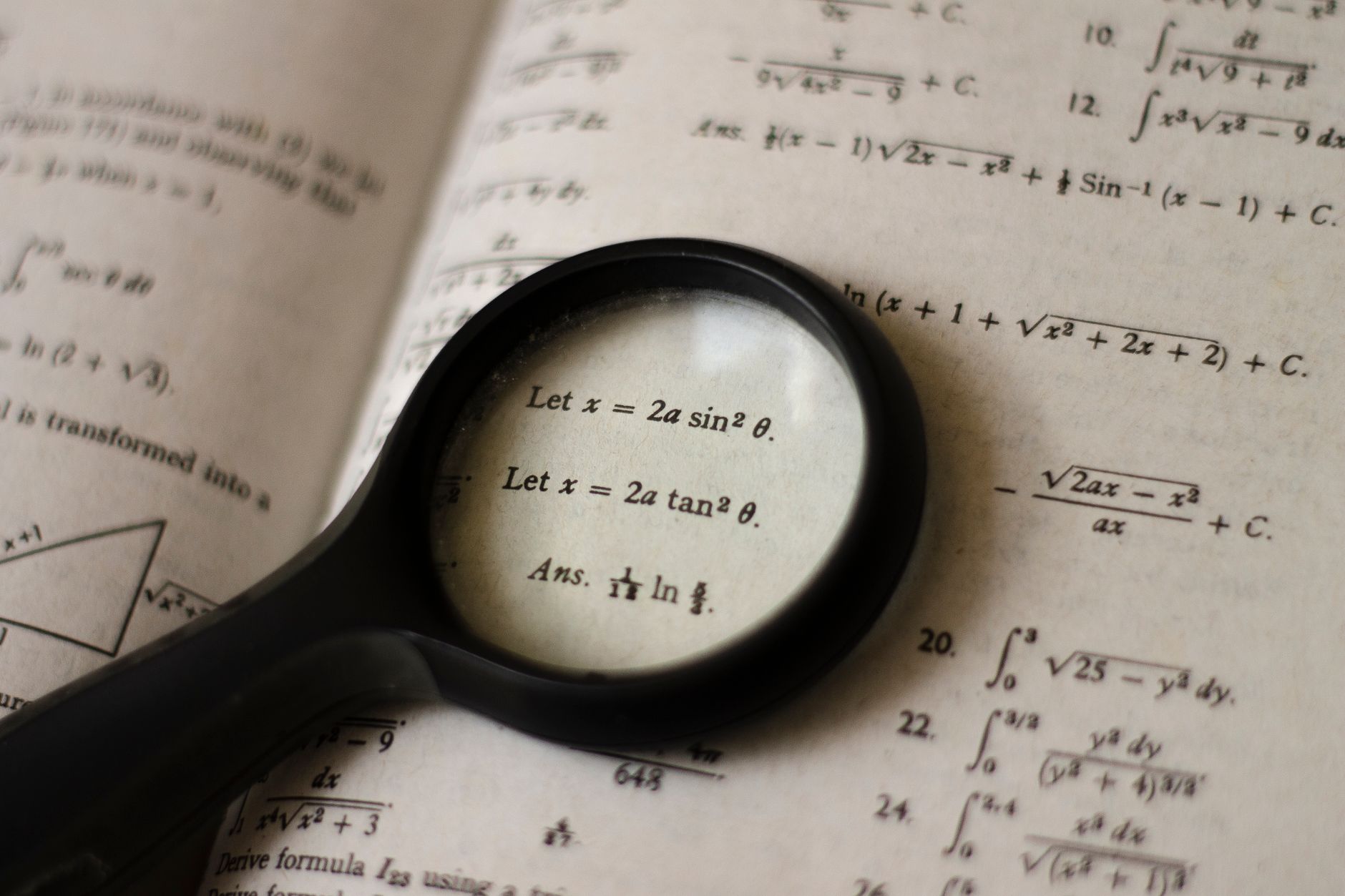
math research problems have recently gained attention as OpenAI releases impressive progress on over 300 mathematical challenges. This development showcases the potential of AI in tackling complex mathematical issues.
Overview of OpenAI’s Math Research
OpenAI has made significant strides in the field of mathematics, revealing advancements on more than 300 math research problems. This groundbreaking work showcases the potential of artificial intelligence in tackling complex mathematical challenges that have puzzled researchers for years. By leveraging advanced algorithms and vast amounts of data, OpenAI’s models have demonstrated an ability to solve intricate problems that were previously considered too difficult for machines.
The progress reported by OpenAI has not only stunned experts but also opened up new avenues for research. The release of these solutions provides a unique opportunity for mathematicians and educators to engage with AI-driven methodologies. Among the highlighted achievements, several problems that fall under the category of combinatorial optimization and algebraic geometry have seen remarkable advancements.
Some key highlights from OpenAI’s research include:
- Innovative algorithms: The development of new techniques that enhance problem-solving efficiency.
- Collaboration with mathematicians: OpenAI has partnered with leading experts to refine its approaches and validate its findings.
- Educational resources: The insights gained from these projects aim to enrich the learning experience for students and aspiring mathematicians.
As the landscape of math research evolves, OpenAI’s contributions are set to play a crucial role in addressing modern math research problems, pushing the boundaries of what is possible in the field.
Significance of AI in Mathematics
The integration of artificial intelligence into mathematics research has revolutionized the way complex problems are approached and solved. OpenAI has made significant strides in addressing various math research problems, unlocking new avenues for exploration and understanding. This advancement is not only beneficial for mathematicians but also for related fields where mathematical principles are foundational.
One of the most notable impacts of AI in mathematics is its ability to analyze vast datasets quickly and efficiently. By leveraging machine learning algorithms, researchers can identify patterns and relationships that might go unnoticed through traditional methods. This capacity for rapid analysis has led to breakthroughs in various mathematical domains, including:
- Number theory
- Algebraic geometry
- Combinatorics
- Topology
Furthermore, AI tools can assist in formulating conjectures and hypotheses, providing a fresh perspective on long-standing problems. The collaboration between human intuition and machine processing power has facilitated the discovery of innovative solutions to math research problems that have stumped experts for years.
As OpenAI continues to release findings on over 300 math research problems, the mathematical community is witnessing a paradigm shift that enhances both the depth and breadth of research capabilities, ultimately paving the way for future advancements.
Key Challenges Addressed by OpenAI
OpenAI’s advancements in tackling significant math research problems have opened new avenues for understanding complex mathematical concepts. Among the key challenges addressed by OpenAI, several stand out due to their profound implications in both theoretical and applied mathematics.
- Algorithmic Efficiency: One of the primary challenges is improving the efficiency of algorithms used in various branches of mathematics. OpenAI has developed techniques that significantly reduce computation time, making it feasible to solve previously intractable problems.
- Proof Generation: The ability to generate rigorous mathematical proofs automatically presents a transformative opportunity. OpenAI’s models have shown remarkable success in creating proofs for complex theorems, thereby assisting mathematicians in verifying their work.
- Pattern Recognition: Identifying patterns within mathematical data is critical for making predictions and formulating new theories. OpenAI’s research has enhanced the capability to discern intricate patterns, leading to groundbreaking discoveries.
- Interdisciplinary Applications: Many math research problems intersect with fields like physics, engineering, and economics. OpenAI’s innovative approaches facilitate collaborative exploration, yielding solutions that benefit multiple disciplines.
These challenges represent a fraction of the potential that AI holds in revolutionizing the landscape of mathematics, showcasing how technology can complement human ingenuity in solving long-standing research problems.
Impact on Future Research
The recent advancements made by OpenAI in tackling math research problems are poised to significantly influence the future of mathematical research. By providing innovative solutions and insights, OpenAI has created a foundation for researchers to explore more complex issues in mathematics, ultimately paving the way for new discoveries.
One of the most notable impacts is the ability to accelerate the pace of research. With AI tools now capable of analyzing vast datasets and identifying patterns that may be overlooked by human researchers, mathematicians can focus on more theoretical aspects while leaving the computational challenges to AI. This collaboration between human intuition and machine efficiency is expected to yield groundbreaking results.
Moreover, the tools developed by OpenAI can enhance educational frameworks, allowing students and aspiring mathematicians to engage with advanced problems more effectively. By simplifying the understanding of complex concepts, these innovations may encourage a new generation of thinkers to take on challenging math research problems.
Additionally, as researchers gain access to AI-driven methodologies, interdisciplinary collaboration may flourish. Fields such as computer science, physics, and economics can benefit from the mathematical advancements, leading to a holistic approach to problem-solving across various domains. The implications of these developments could reshape how mathematical research is conducted, making it more inclusive and robust.
Comparing Traditional Methods with AI
The landscape of mathematics has been significantly transformed by advancements in artificial intelligence, particularly in the realm of math research problems. Traditional methods of tackling these issues often relied heavily on manual calculations and theoretical frameworks established over decades. However, the introduction of AI tools, like those developed by OpenAI, has shifted this paradigm.
One key difference lies in the approach to problem-solving. Traditional methods typically involve:
- Extensive collaboration among mathematicians,
- Time-consuming proofs that can take years to verify,
- Dependence on established theorems and prior knowledge.
In contrast, AI-driven approaches offer a more dynamic and efficient solution. These methods are characterized by:
- Rapid processing of vast amounts of mathematical data,
- Real-time simulations that allow for immediate feedback,
- Innovative techniques that can discover new patterns and solutions previously overlooked.
Moreover, AI systems can learn from a multitude of sources, adapting their strategies as they encounter new math research problems. This capability not only enhances efficiency but also opens up avenues for exploration that were once considered too complex or time-intensive. As a result, mathematicians are now able to focus on higher-level concepts, moving beyond traditional constraints.
Community Reactions to OpenAI’s Progress
As news broke about OpenAI’s impressive advancements in tackling over 300 math research problems, the community responded with a mix of admiration and skepticism. Researchers and educators across various fields have begun to assess the implications of these developments for traditional mathematics.
Many celebrated the breakthroughs, highlighting the potential for AI to enhance mathematical understanding and accelerate research. Dr. Emily Chen, a professor of mathematics, remarked, “The ability of AI to solve complex problems that have stumped humans for years opens up new avenues for exploration and innovation in the field.”
However, not all feedback was positive. Some mathematicians expressed concerns about the reliability of AI-generated solutions. Professor Mark Thompson voiced caution, stating, “While the efficiency of AI is impressive, we must ensure that the solutions are rigorously verified. Mathematics is built on a foundation of proof, and we cannot overlook that.”
Additionally, a segment of the academic community is worried about the potential over-reliance on AI tools. They argue that the human element in problem-solving is irreplaceable, and they emphasize the need for a balanced approach that combines AI capabilities with traditional methodologies.
In summary, the reactions to OpenAI’s progress reflect a complex interplay of excitement and caution, as the community grapples with the future of mathematics and the role of AI in addressing pressing math research problems.
Future Directions for AI in Math
As the landscape of mathematical research continues to evolve, the integration of artificial intelligence presents exciting avenues for exploration. The recent advancements made by OpenAI in tackling over 300 math research problems have opened up new possibilities for future directions in this field. AI not only enhances the efficiency of solving complex problems but also introduces innovative techniques that challenge traditional methodologies.
Looking ahead, several key areas stand out where AI can significantly contribute to math research:
- Automated Theorem Proving: AI systems can be designed to automate the process of proving mathematical theorems, potentially uncovering new insights and reducing the time required for proof verification.
- Data-Driven Insights: Leveraging large datasets, AI can identify patterns and trends that may not be immediately apparent, leading to novel hypotheses and research problems.
- Interdisciplinary Applications: The application of AI in mathematics can bridge gaps with other fields, such as physics and computer science, fostering interdisciplinary research that addresses complex global challenges.
- Collaboration with Humans: Future AI models are likely to work alongside human mathematicians, enhancing creativity and expanding the scope of research by providing suggestions and alternative approaches to math research problems.
As OpenAI continues to advance its research efforts, the potential of AI in mathematics remains vast, promising a transformative effect on the future of mathematical inquiry.
Photo by Nothing Ahead on Pexels
References
Related stories
October 2026 Pixel Update: Best Audio Upgrade Features · Pokémon Horizons Season 4: Best Release Date Revealed · Reflection AI Model: The Worst Challenge to China